article · Planning
A stone backsplash layout begins with the interruptions
A backsplash mood board usually shows a generous stretch of beautiful material. The real kitchen wall may contain outlets, a window, a hood, cabinet returns and a transition to an adjoining room. Make a simple elevation that includes these interruptions before choosing a preferred pattern. Identify which objects will remain and which are still being selected. An owner can prepare this observation drawing, but the project team must verify dimensions and the technical requirements of fixtures or appliances before it becomes an instruction for cutting or installation.
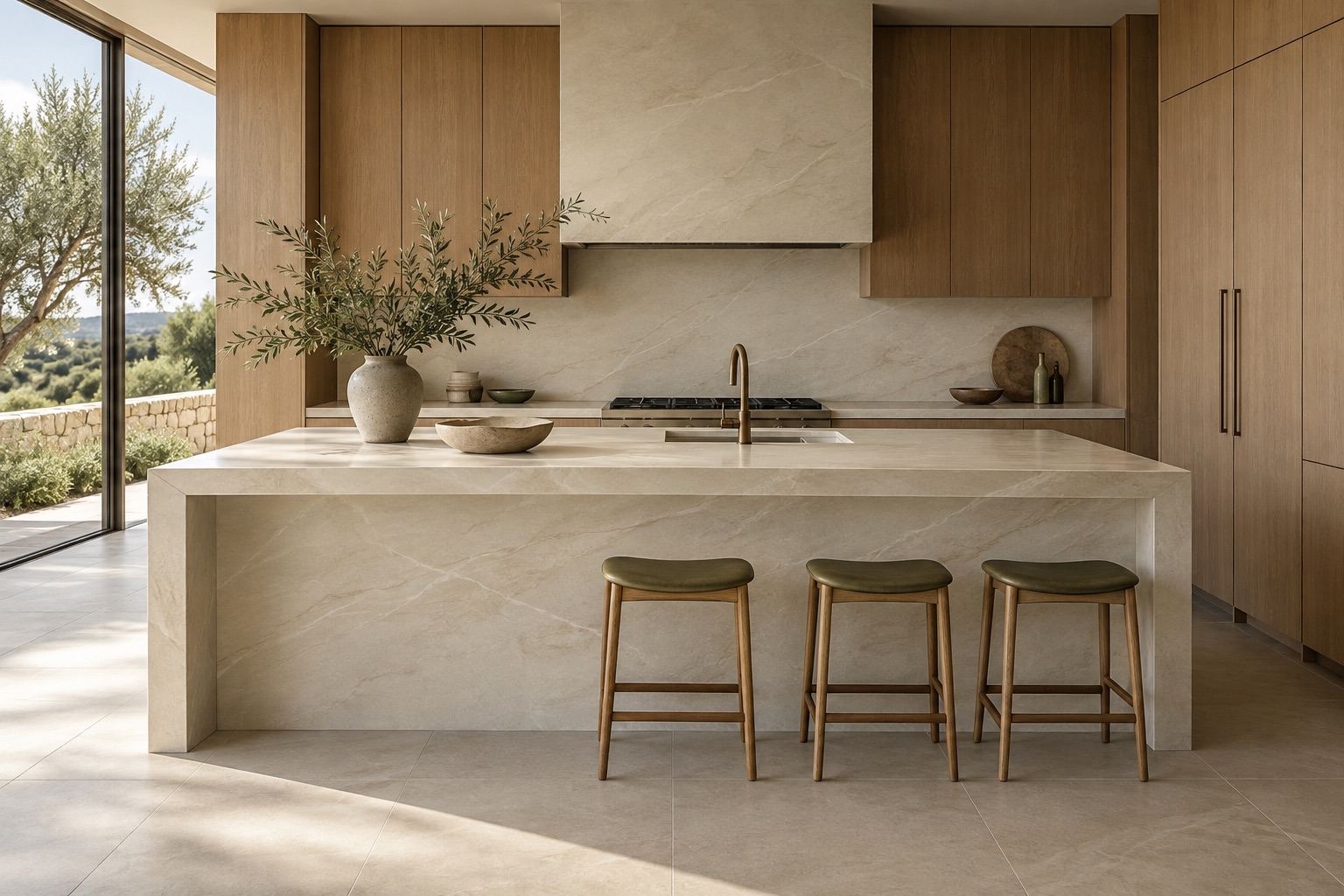
Draw the wall that will actually be built
A backsplash mood board usually shows a generous stretch of beautiful material. The real kitchen wall may contain outlets, a window, a hood, cabinet returns and a transition to an adjoining room. Make a simple elevation that includes these interruptions before choosing a preferred pattern. Identify which objects will remain and which are still being selected. An owner can prepare this observation drawing, but the project team must verify dimensions and the technical requirements of fixtures or appliances before it becomes an instruction for cutting or installation.
Mark the parts of the wall that people see first when entering the room and the places normally hidden by countertop appliances. This helps the household decide where pattern alignment or a finished edge deserves the most attention. Ask whether the backsplash ends at a cabinet line, continues around a corner or meets a painted wall. Each choice has a visual consequence and a scope consequence. Leave an unresolved edge visibly open on the drawing instead of allowing the sample approval to imply a boundary that nobody has actually discussed.
Compare slab and tile as different layout conversations
For a slab backsplash, review the proposed cutting presentation with the actual material identity and ask the fabricator how the wall pieces relate to the countertop. Do not assume that a photograph showing continuous veining establishes a feasible arrangement for the selected slabs. For a tiled stone backsplash, request a layout showing courses, edges and interruptions. These are different planning methods even when both proposals use the same stone family. Decide which visual priorities matter before a quote treats one approach as an automatic substitute for the other.
Include the joint appearance in the sample discussion. TCNA's grout guidance explains that material variation and installation conditions affect joint planning; the line shown in a rendering is therefore not the full specification. Ask the installer to identify the grout, edge treatment and change-of-plane detail appropriate to the selected material and assembly. Where a polished or otherwise delicate finish is proposed, require the selected product's compatibility information instead of borrowing a cleaning or installation recommendation intended for a different surface. The mockup can support approval without claiming to certify the finished assembly.
Coordinate the order with the neighboring work
Explain the desired relationship between the backsplash and the countertop, then ask the trades to agree on the sequence that will establish it. Record who verifies the finished countertop position before the wall pieces are released and who coordinates any outlet or fixture adjustment. The owner should not be expected to resolve trade interfaces from a photograph after materials arrive. Give each unresolved interface a responsible person and a decision point. If the backsplash depends on a cabinet or hood change, keep that dependency visible rather than treating the wall order as independent.
At approval, retain the wall elevation, material identity, reviewed edge presentation and specific care instructions. Ask how a changed outlet location or a damaged piece would affect the agreed layout and whether matching stock would still be available. A purchase decision becomes stronger when it anticipates the actual wall, including the ordinary objects that interrupt the design. This does not guarantee a seam-free result or a particular cleaning outcome. It gives the household and installer a shared basis for explaining the finished backsplash and for discussing a change before it becomes irreversible work.
Sources
- A beginner’s guide to stone selection Natural Stone Institute / Use Natural Stone
- Grout: joint planning and changes of plane Tile Council of North America
- Installation standards for countertop fabricators Natural Stone Institute